
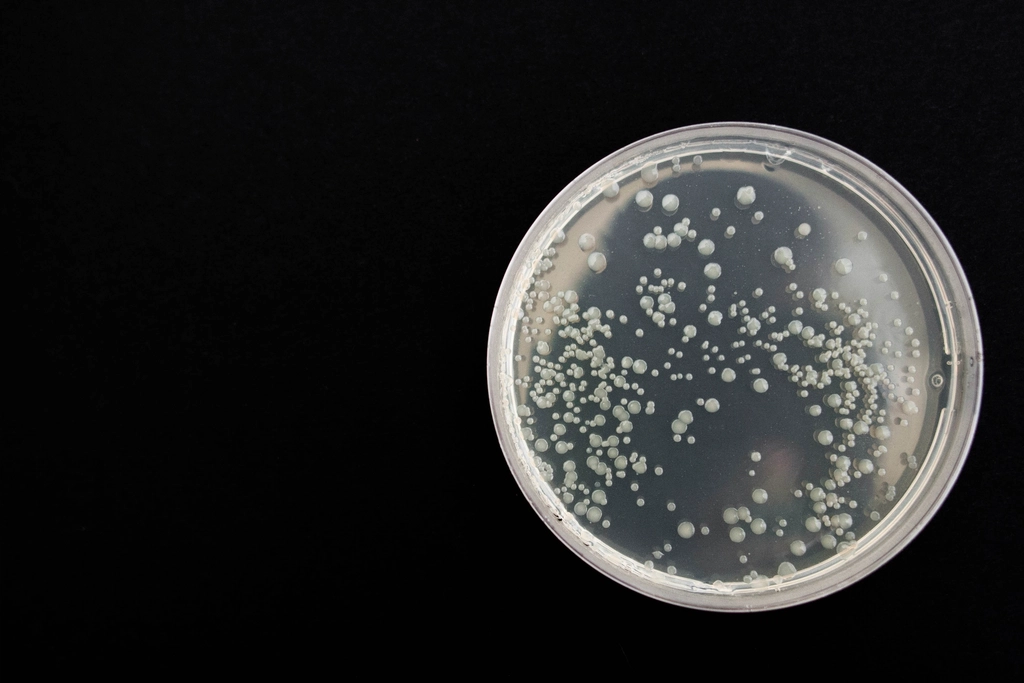

Researchers in Germany buried thin films of plastic in garden soil, waited about a year, then went looking for the microbes that ate them. What they found was an enzyme with an unusually wide-open “mouth,” nicknamed the “Pac-Man enzyme,” that can break down certain biodegradable plastics. The surprise: it can also cut apart penicillin.
The work, from biologists and chemists at the University of Konstanz, is published in The ISME Journal and was highlighted by ScienceDaily on Oct. 16.
What the Researchers Did
Biologists Harry Lerner and David Schleheck tested a class of bioplastics called long-chain aliphatic polyesters, or LCAP, developed by chemist Stefan Mecking’s group at the same university. Like other polyesters, these plastics are held together by ester bonds, the kind of chemical link that microbial enzymes can snip.
The team buried LCAP film about 10 centimeters (roughly 4 inches) deep in humus at the university’s botanical garden and ran year-long soil incubations in the lab, tracking the carbon dioxide the microbes gave off as they fed. For comparison they also tested cellulose, two other biodegradable plastics (PHBV and PCL) and ordinary high-density polyethylene, or HDPE.
- Cellulose was gone in about 80 days.
- LCAP and the other bioplastics fully broke down in roughly 250 to 330 days, or about nine to 11 months.
- HDPE, the conventional plastic, showed virtually no degradation.
To find out which microbes were doing the work, the researchers sequenced all the DNA in the soil community and looked for genes that became more common only where LCAP was present. One gene stood out. It codes for an esterase, an enzyme that splits ester bonds, which the team then studied in detail.
Why “Pac-Man”?
A 3D model of the enzyme, built with the AI tool AlphaFold3, showed an active site that Lerner described as “unusually wide open.” That roomy pocket appears to let bulky molecules in, including long polymer chains.
The enzyme also has a built-in anchor that keeps it attached to the outside of the bacterial cell rather than drifting off into the soil. Under an electron microscope, the buried plastic film was pocked with tiny holes about the size of a single bacterial cell. The researchers’ hypothesis is that bacteria park on the plastic and digest their way in, absorbing the broken-down pieces right where they are released. Schleheck said the results suggest “bacteria can adapt to breaking down polyester plastics more quickly than we expected.”
The Penicillin Twist
The enzyme’s structure resembles two families at once: esterases, which break down fats and polyesters, and beta-lactamases, the enzymes some bacteria use to destroy penicillin-type antibiotics. In lab tests, it did cleave penicillin.
That matters because beta-lactamases are a major driver of antibiotic resistance. The authors suggest the penicillin-cutting ability could be an evolutionary leftover in an enzyme that now specializes in plastics, and that studying these “plastisphere” microbes could shed light on how resistance genes move around in the environment.
What It Means for the Plastics in Your Recycling Bin
For American shoppers, the most practical takeaway may be the HDPE result. HDPE is the sturdy plastic used for things like milk jugs and detergent bottles, and in this study soil microbes barely touched it. The enzyme story is about plastics designed to break down, not the conventional plastics that make up most packaging.
It is also a reminder that “biodegradable” depends on conditions. The bioplastics here took most of a year in rich, biologically active soil. The Federal Trade Commission’s Green Guides say an unqualified “biodegradable” label implies a product will fully break down within one year after customary disposal, and the agency has warned that most trash ends up in landfills, where plastic does not break down anywhere near that fast, if at all. If a product says it is compostable only in commercial facilities, check whether your area actually has one before you count on it.
The Catch
- Cutting penicillin in a test tube does not show that the enzyme makes living bacteria resistant to antibiotics. The authors say that link has not been established.
- The idea that bacteria tunnel into plastic using cell-anchored enzymes is a hypothesis based on microscope images and the enzyme’s structure, not a confirmed mechanism.
- The study used one soil from one garden and a specific family of experimental bioplastics. Results in landfills, oceans or home compost could be very different.
- Polyethylene was essentially untouched, so this is not a solution for the conventional plastic already in the environment. The researchers note that real reductions in pollution would require more products made from materials microbes can actually digest.
More on Contoh
- A Fossil That Sat in a Museum Drawer for Nearly 100 Years Is Europe’s First Megaraptor
- Physicists Build the First Working Nuclear Clocks, and One Can Keep Itself in Tune
- Why Does the Moon Have Two Faces? First Far-Side Rocks Point to Earth’s Pull
Sources
- ScienceDaily: Scientists discover a plastic-eating “Pac-Man” enzyme with a surprising secret
- University of Konstanz: New type of plastic-degrading enzyme discovered in bacteria
- The ISME Journal: Bacterial family-VIII esterase displays dual activities (Lerner et al.)
- Federal Trade Commission: Green Guides guidance on biodegradable and compostable claims