
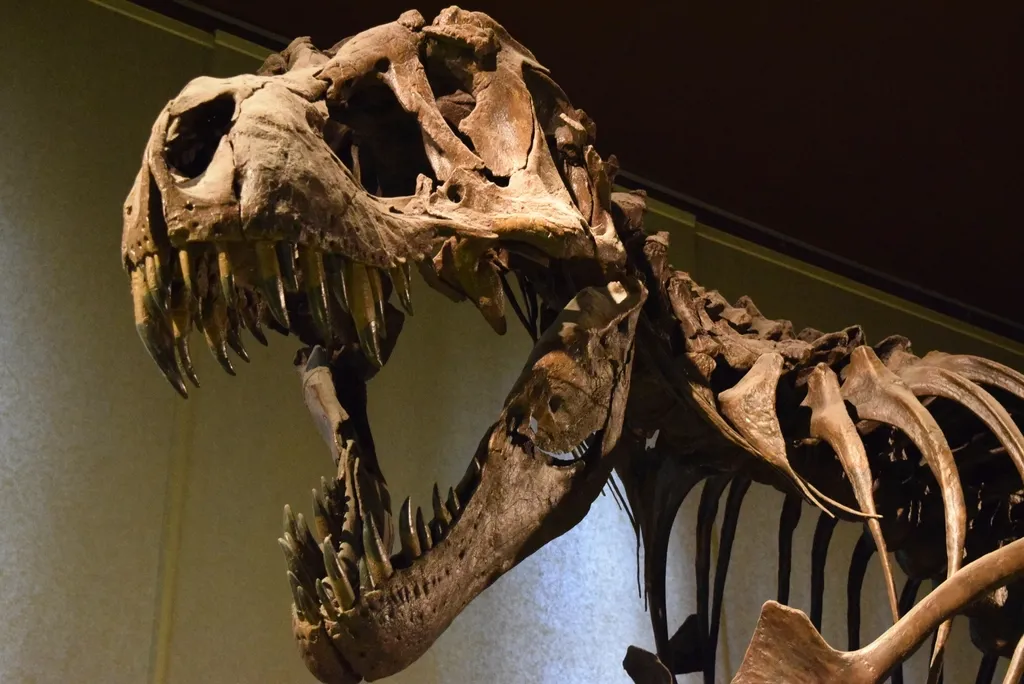

Researchers say they have found chemical traces of hemoglobin, the molecule that carries oxygen in blood, inside fossilized red blood cells from a dinosaur that lived about 115 million years ago.
The work, from Curtin University in Australia and partners in Japan, Brazil and the U.S., was published in Proceedings of the National Academy of Sciences. The team examined limb bones from Aratasaurus museunacionali, a meat-eating theropod found in northeastern Brazil.
What They Found
Inside tiny channels in the bone that once carried blood vessels, the researchers saw numerous mineralized red blood cells. Chemical analysis then picked up heme, the iron-bearing part of hemoglobin, along with amino acids linked to collagen. The university describes it as the first definitive chemical confirmation of hemoglobin-derived molecules in fossilized dinosaur red blood cells.
“To detect intact heme-derived molecules in 115-million-year-old red blood cells is astonishing: this really is a landmark discovery,” said lead author Prof. Kliti Grice of Curtin University.
How Could Blood Last That Long?
The team suspects a mineral called hausmannite helped stabilize the cells. They also believe the animal was buried quickly in sediment that was low in oxygen and rich in microbes. Both ideas are hypotheses, not proven mechanisms.
Why It Matters
For years, many scientists assumed delicate biomolecules like hemoglobin could not survive deep time. Grice said the findings challenge that assumption. If similar preservation turns up in other fossils, researchers could learn more about how blood and metabolism evolved, and how active ancient animals may have been. The authors also point to astrobiology: the same methods could be used to look for ancient molecular signatures in extreme environments, including beyond Earth.
The Catch
This is one dinosaur, and the university summary does not say how many samples were tested. The preservation explanation is still a best guess, and the astrobiology angle is a possibility rather than a result. Other labs will need to repeat the analysis on different fossils before the claim is settled.
Prehistoric science stories like this one keep turning up surprises. Earlier this month we covered a Neanderthal who was likely killed by a spear and then buried.
More on Contoh
- A Spear Likely Killed This 75,000-Year-Old Neanderthal, and He Was Buried Afterward
- Earth’s Core May Be Leaking Hydrogen Into the Mantle, a New Study Suggests