
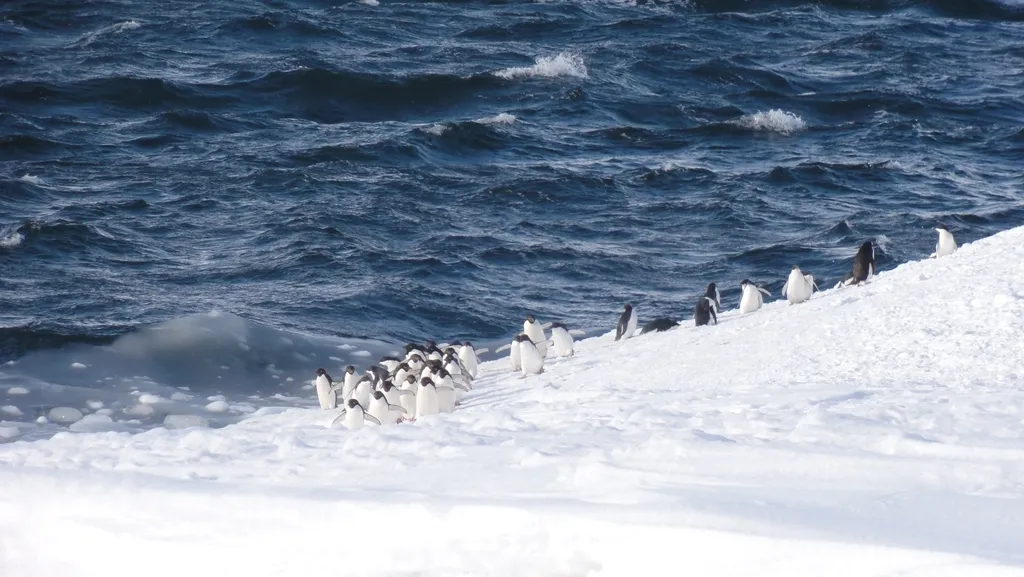

Two groups of Erect-crested penguins, living on islands in the same part of the Southern Ocean, have gone very different ways. One colony has held steady for at least 25 years. The other has shrunk by more than 40% since 1995, according to a new drone survey from researchers at the University of Otago in New Zealand.
The finding, published in PLOS ONE, matters because the species’ official conservation rating rests on old numbers.
What the Drones Found
The team used drones to count every breeding colony from 2022 to 2024. The authors describe it as the first complete survey of the species. Erect-crested penguins breed on two remote island groups about 500 miles (800 kilometers) southeast of New Zealand’s South Island.
- Bounty Islands: about 27,800 breeding pairs on roughly 50 hectares (about 124 acres), with little change in at least 25 years.
- Antipodes Islands: about 29,800 breeding pairs spread over an area about 40 times larger, down more than 40% since 1995.
Why the Rating Is a Problem
The International Union for Conservation of Nature lists the Erect-crested penguin as Endangered, one of four penguin species with that rating. The authors say that rating relies on 1970s population estimates they call “considerably inflated.”
Simply averaging the two populations would point to a milder “Vulnerable” label. The authors warn that this could create a false sense of safety. As lead author Thomas Mattern put it, “A single, ostensibly improved threat ranking is like putting the lid back on Schrödinger’s box.”
Possible Causes
The study does not prove why the two colonies diverged. The authors suggest several factors that may help explain it: skuas, a predatory seabird, preying on eggs and chicks; a collapse in eastern rockhopper penguins that may have shifted skua attention; landslides triggered by storms; and different migration routes, with Antipodes birds heading to the Antarctic Polar Frontal Zone.
The Catch
These are possible explanations, not established causes. The Bounty population may also still face serious threats, especially from industrial fishing, the researchers say. One stable colony does not cancel out a falling one.
If you want more on how scientists find and describe wildlife that is hard to reach, see our stories on the Tilcayo wild cat and on how a new model changes the outlook for Antarctica’s Thwaites Glacier.
More on Contoh
- Meet the Tilcayo: The First New Wild Cat Species Named in Over a Century
- Antarctica’s “Doomsday Glacier” Could Raise Sea Levels Twice as Much as Predicted, New Model Finds