
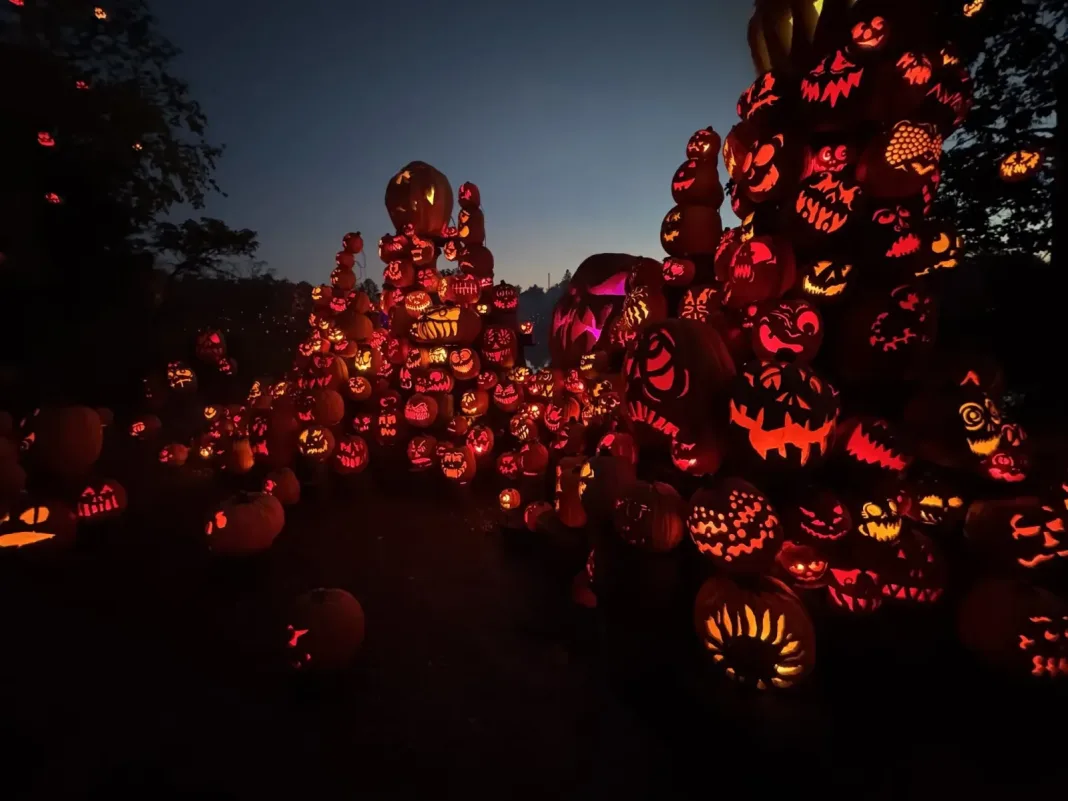

Halloween is one of the best nights of the year for kids. It is also, statistically, one of the riskier nights to be a small person walking near traffic. That is not a reason to cancel trick-or-treating, and the researchers who studied it say so plainly. But it is a good reason to plan the evening with cars in mind.
Here is what the best-known study found, what it can and cannot tell us, and the practical steps pediatricians and federal safety officials recommend.
What the Research Found
In a research letter published in JAMA Pediatrics in 2019, a team led by researchers at the University of British Columbia analyzed 42 years of U.S. crash data, from 1975 to 2016. They used NHTSA’s Fatality Analysis Reporting System, a national database of fatal crashes.
The design was simple. The researchers counted pedestrian deaths between 5 p.m. and midnight on Oct. 31, then compared them with the same hours one week earlier and one week later. Using control evenings on either side helps account for things like season, weather and the amount of daylight.
The key results:
- There were 608 pedestrian deaths on the 42 Halloween evenings, compared with 851 on the 84 control evenings.
- That works out to roughly 2.07 deaths per hour on Halloween versus 1.45 on comparison evenings, an increase of about 43%.
- On average, each Halloween was associated with about four additional pedestrian deaths.
- The biggest jump was among children ages 4 to 8, whose risk was about 10 times higher than on comparison evenings.
- The danger peaked around 6 p.m., right when early trick-or-treating overlaps with dusk and the evening commute.
There was also some encouraging news. The relative risk on Halloween stayed fairly steady over the decades, but the absolute rate of these deaths fell by about half, from 4.9 to 2.5 per 100 million Americans between the first and last decades of the study.
The researchers found no differences between Halloween and control evenings in driver age or sex, crash location, vehicle size, or police-reported alcohol and speeding. In other words, the extra risk seemed to come mostly from many more children being out on foot after dark, not from a different kind of driver.
The Catch
- It is observational. The study shows a strong pattern, not a precise cause. It cannot say exactly why each crash happened.
- The data end in 2016. Cars, streets, phones and Halloween habits have changed since then. Trunk-or-treat events and earlier start times may have shifted the picture in some communities.
- Absolute numbers are small. Four extra deaths a year across the entire country is a tragedy for each family involved, but the chance that any particular child is hurt is very low. The point is not to panic; it is to remove avoidable risks.
- The statistic is a ratio. The paper reports odds ratios, which describe how much higher the risk is relative to normal evenings, not the overall probability of being hit.
Notably, the authors argued against the idea of cutting back on trick-or-treating. Instead, they called for safer residential streets year-round, including traffic calming, automated speed enforcement in neighborhoods, limits on street parking, and reflective patches on clothing.
Alcohol Adds to the Risk
Halloween is also a party night for adults. According to NHTSA, nearly half of all crash deaths on Halloween night in 2023 involved alcohol. This year, Oct. 31 falls on a Saturday, so expect both trick-or-treaters and party traffic on the roads.
How to Make Trick-or-Treating Safer
The American Academy of Pediatrics (AAP) and NHTSA both publish Halloween safety guidance. Most of it comes down to two ideas: be seen, and walk where drivers expect you.
For Kids and Parents
- Go with young children. The AAP says an adult should always accompany young trick-or-treaters. Older kids should go in a group with a planned route and a set time to be home.
- Light them up. Choose bright costumes and add reflective tape, glow sticks or glow-in-the-dark details to costumes and treat bags. Give everyone a flashlight.
- Use sidewalks. If there is no sidewalk, walk on the far edge of the road facing traffic.
- Cross at corners. Cross as a group at crosswalks or intersections. Avoid crossing mid-block, between parked cars, or out of driveways and alleys.
- Don’t assume drivers can see you. Teach kids to look in every direction, including for turning cars, and to wait until a car has actually stopped.
- Put the phone away. Kids and adults should skip texting, games and earbuds while walking.
- Start early. For younger children, the AAP suggests an earlier event if trick-or-treating would otherwise start after dark. Given the 6 p.m. peak, earlier is better anyway.
- Use a buddy system. NHTSA recommends that nobody walks alone.
For Costumes
- Make sure costumes and shoes fit well and are short enough not to trip on.
- Look for “flame resistant” on the labels of costumes, wigs and accessories.
- Choose face paint or a hat over a mask that blocks vision, and test makeup on a small patch of skin first.
- Skip decorative contact lenses unless an eye doctor has examined your child and written a prescription. The AAP notes they are medical devices and can cause serious eye damage.
- Avoid long or sharp props like swords and canes.
For Drivers
- Slow down in neighborhoods, especially around dusk and in the early evening.
- Keep scanning the road and watch for children in unexpected places, including darting out between parked cars.
- Take extra care pulling in and out of driveways and alleys.
- Put your phone away and turn your headlights on early.
- If you see a driver who appears impaired, contact law enforcement.
- Parents of teen drivers: the AAP suggests setting specific rules for driving on Halloween.
For Hosts and Homeowners
- Turn on the porch light and replace burned-out bulbs. The AAP advises kids to visit only well-lit homes.
- Clear hoses, toys, bikes and wet leaves from walkways and steps.
- Use battery-operated lights inside pumpkins instead of candles near paths.
- Keep pets restrained so they do not jump on or frighten visitors.
- If you are hosting a party, offer nonalcoholic drinks, help guests arrange a sober ride or rideshare, and take keys from anyone who has been drinking, as NHTSA recommends.
A Note on Food Allergies
For kids with food allergies, the AAP suggests making sure they carry any prescribed emergency medicine, such as an epinephrine auto-injector, and that every supervising adult knows how to use it. Non-food treats like stickers, bubbles and glow sticks are a friendly option for any house to hand out. Save candy inspection and sorting for when everyone is back home, and toss anything unwrapped or suspicious.
The Bottom Line
Halloween evenings are measurably riskier for young pedestrians, especially kids ages 4 to 8 around dusk. The fixes are simple and mostly about visibility, supervision and slower driving. Light up the costume, hold small hands at crossings, start a little early, and if you are behind the wheel, drive as if a tiny superhero could step out from behind every parked car. Because one might.
Also worth knowing: daylight saving time ends on Nov. 1, the morning after Halloween this year, so evenings will get dark even earlier from then on.
This article is for general information, not medical advice.
More on Contoh
- Falling Back on November 1: How to Protect Your Sleep When the Clocks Change
- Daylight Saving Time Ends Nov. 1: A Quick Fall-Back Checklist
- Do You Really Need 10,000 Steps a Day? What the Research Says