
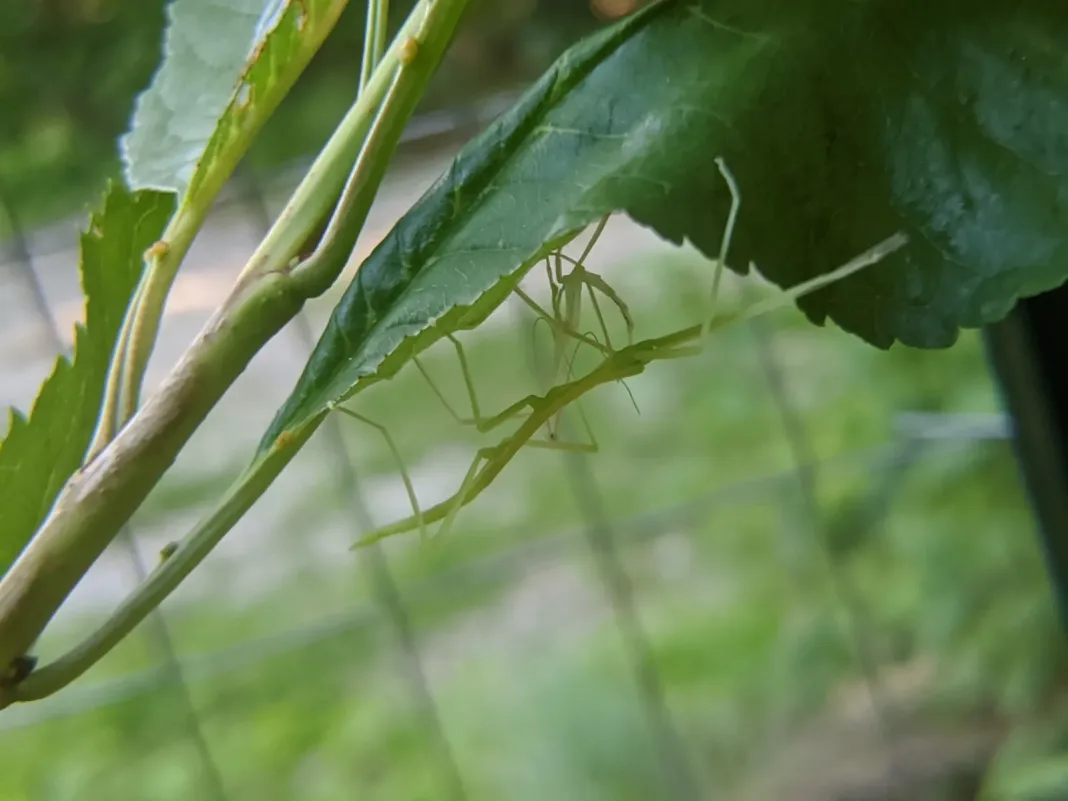

For decades, researchers thought they knew Australia’s large Anchiale stick insects. It turns out they were mixing up several different species.
A team at the University of Sydney has shown that what were thought to be two species are actually five. One large insect had been misidentified for decades and has now been recognized as its own species, Anchiale robusta.
Eggs with lids
The team also described a brand-new species, Anchiale mabiensis, found in the critically endangered Mabi rainforest on Queensland’s Atherton Tablelands. Its eggs have an unusual structural lid – something that has never been documented in any stick insect or its closest relatives before.
A further species from Cape York has been identified but not yet named; researchers need more specimens first.
How they worked it out
Stick insects are masters of disguise, and similar-looking species are easy to confuse. The researchers combined DNA analysis with museum specimens, field surveys, captive insects and observations sent in by members of the public.
Why it matters
You can’t protect a species you don’t know exists. Finding a new species in a critically endangered rainforest is a reminder of how much may still be unrecorded – and what could be lost along with habitat.
More on Contoh
- Meet the Tilcayo: The First New Wild Cat Species Named in Over a Century
- A Forgotten 30-Year Forest Experiment Found Thinned Stands Stored as Much Carbon as Untouched Ones
- Galápagos Corals Suggest El Niño Is Stronger Now Than at Any Time in 1,000 Years